

- Plan Your Visit
- Learn
- Give
- Collections


The Making of a Soldier President
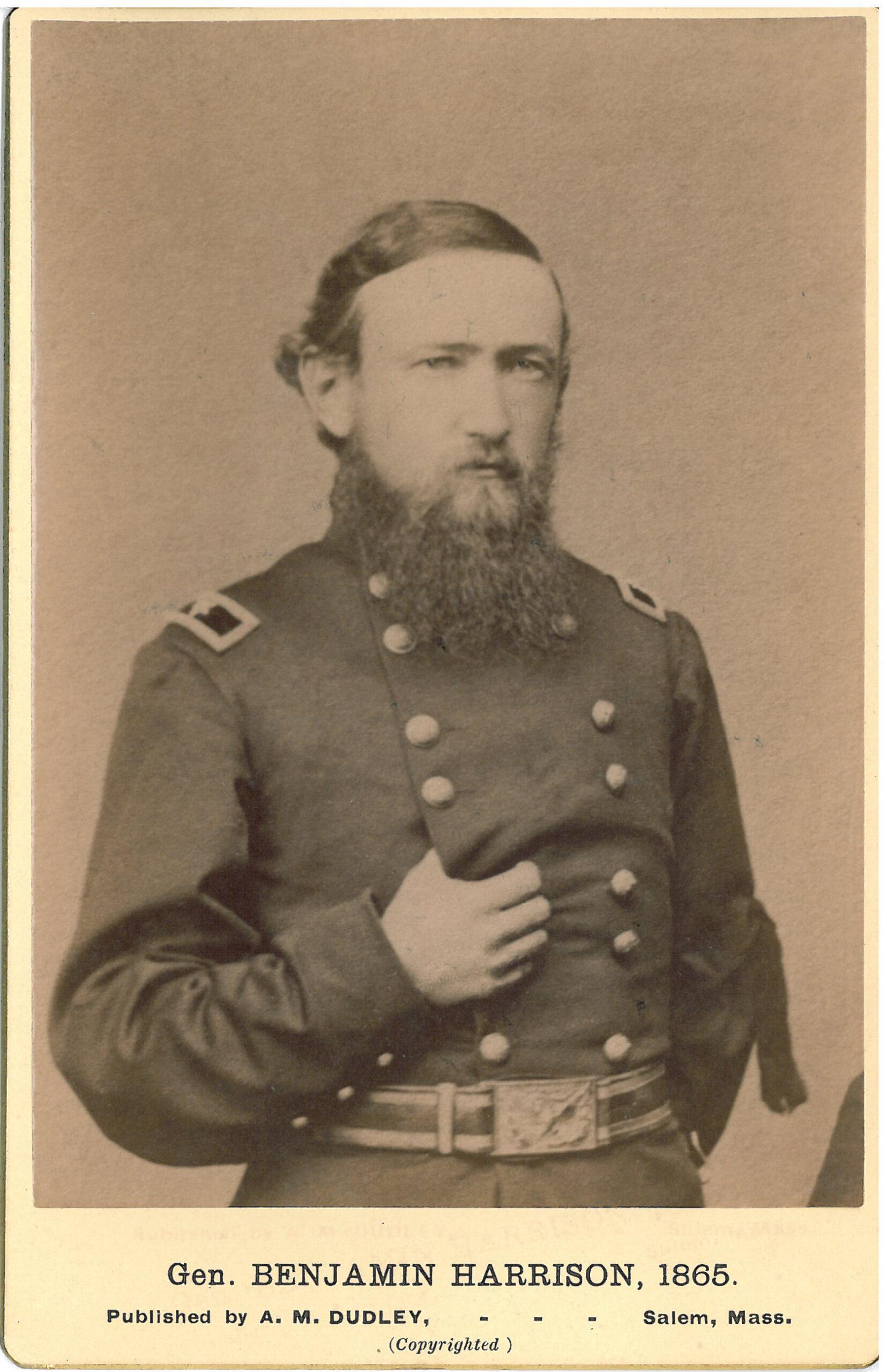
The Making of a Soldier President
By Dr. Robin M. Bates
Elaine Kops-Bedel and Eric Bedel Presidential Research Fellow
Rothermere American Institute, University of Oxford
When President Benjamin Harrison stood at the United States Capitol to make his inaugural address in March 1889, he emphasized the debt that he and his government owed to the nation’s soldiers. “Such occasions as this,” he noted, “should remind us that we owe everything to their valor and sacrifice.” The new President knew much about the sacrifices that such men had made. As an officer in the Union Army, Harrison had shared with his men the innumerable trials that confronted them on the battlefield, on the march, and around the campfire, in the process of which he established a relationship that would continue for the rest of his life.
Writing to his wife Caroline during the war, Harrison had often expressed his concern for, and identification with, the men under his command. In December 1862, Harrison had written from Gallatin, Tennessee to share his anxieties about his men’s health, noting the hardship entailed in hard marching and lamenting the rapidity with which sickness had spread through the ranks. “Gallatin is one vast Hospital,” he explained, and many of the hospitals in which his men were treated were “said to be very filthy and poorly provided.” As the war went on, Harrison frequently had cause to describe the difficulties of military life as his men were laid up by illnesses or struck down by sunstroke. Nor did Harrison himself escape the hardships of war. Writing to Caroline from outside Atlanta in August 1863, Harrison explained that a recent bout of illness had left him feeling “run down,” and that his skin was covered in sores. Marching through Georgia the following year brought additional problems. “My skin is all broken out in blotches and small sores resulting from insect bites,” he complained.’
Despite these hardships, Harrison’s concern for the men under his command ensured that he was an admired and popular presence. From Gallatin in 1862, Harrison told Caroline of a fourteen-mile round trip he had made to visit some of the men under his command, including some of those who were confined in the city’s hospitals. “The boys seemed glad to see me,” he informed her, explaining that he had had some “familiar talks with them that they seemed to like.” There seemed to be a “capital feeling towards me in the regiment,” he added. The day before, Harrison continued, he had visited a hospital where several of his men were convalescing, and they had been delighted to see him. “One young fellow started right up in bed when he saw me, and with tears in his eyes seized me with both hands and held on to me for five minutes,” he wrote. “All seemed delighted and cheered to see me.” Such was Harrison’s esteem for his men, in fact, that he was unwilling to leave them…
Click here to read the full article.
The Elaine Kops-Bedel and Eric Bedel Presidential Research Fellow is a prestigious annual research fellowship with the Benjamin Harrison Presidential Site in partnership with the Rothermere Institute at the
University of Oxford. This specialized research draws from primary sources in the Benjamin Harrison Presidential Site’s extensive original collection, as well as other prominent state and national research archives.

Attention Guests
The Presidential Site will be closed on Monday, September 7, 2026 in observance of Labor Day.
Buy Tour Tickets
Thank You!
Thank you for being an important part of the Presidential Site and sharing a legacy in action!